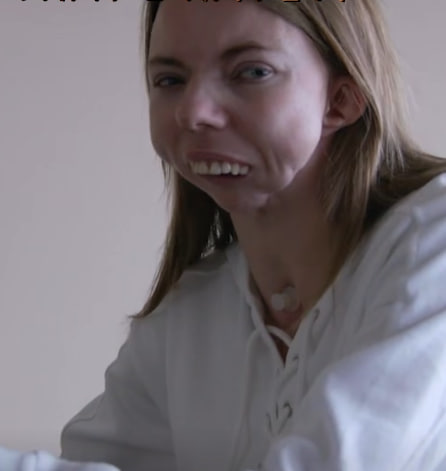
She was born with a rare and severe facial condition: a missing or underdeveloped jaw. From the very beginning of her life, everyday activities that most people take for granted became major challenges. Eating, speaking, and even basic social interaction required constant adaptation and resilience.
As she grew up, her condition shaped almost every part of her life. Medical appointments, careful routines, and physical limitations became normal. But beyond the physical difficulties, there was also an emotional burden—feeling different, often misunderstood, and frequently observed by strangers.
Despite these hardships, she continued to move forward, supported by her family and the hope that medical advances might one day offer a solution.

A life defined by struggle
For 21 years, her condition remained a constant part of her reality. Communication was difficult, and daily life required effort far beyond what most people experience. Social situations were often overwhelming, leading her to withdraw at times to avoid attention or discomfort.
Doctors monitored her condition over the years, but treatment options were limited for a long time. Many believed that only partial improvements would be possible.
A turning point in adulthood
Everything changed when specialists introduced the possibility of a complex reconstructive surgery. The procedure was highly technical and carried significant risks, but it also offered something she had never had before—real hope for transformation.
After careful evaluation and preparation, she agreed to proceed with the surgery.
The medical team worked to reconstruct and improve the structure of her jaw, aiming to restore both function and facial balance. The process required precision, multiple stages, and a long recovery period.
The results that followed
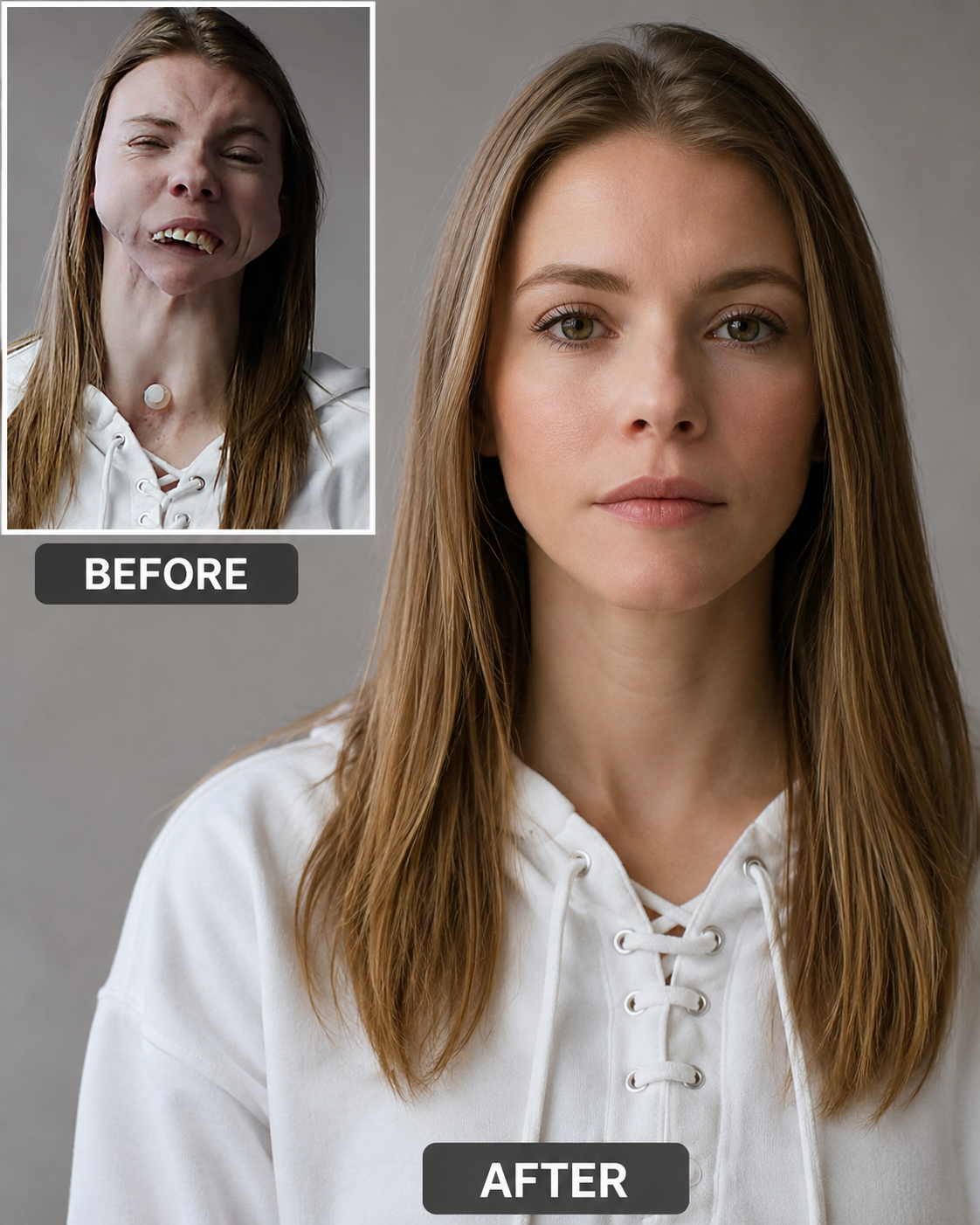
After surgery, the changes were significant. Her facial structure began to improve during recovery, and her ability to perform basic functions gradually increased. Medical staff described the outcome as a major success in terms of both functionality and appearance.
While recovery is ongoing and results continue to develop over time, the improvement marked a clear turning point in her life.
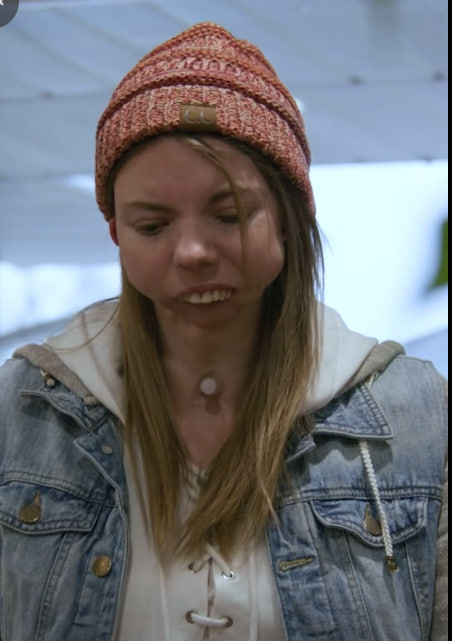
More importantly, it changed how she could experience the world. Simple actions that once felt impossible or extremely difficult became more manageable.
A new chapter begins
Her story has since gained attention online, not only because of the transformation itself but because of what it represents: the progress of reconstructive medicine and the strength required to live with a rare condition for so long.
It is a reminder that behind every medical case is a person who has lived through years of challenges, adaptation, and perseverance.
 Her before-and-after images continue to circulate widely, drawing attention to a journey that has only just begun.